
- Home
- About Us
- Services
- Cosmetic Dentist San Jose
- Dental Crowns
- Dental Implants San Jose
- Dental Infection Treatment
- Dental Sealants San Jose
- Dentures San Jose
- Emergency Dentist San Jose
- Family Dentist San Jose
- General Dentist San Jose
- Invisalign San Jose
- Knocked-Out Tooth
- Laser Dentistry San Jose
- Pediatric Dentist San Jose
- Preventative Dentist San Jose
- Our offices
- Blogs
- Contact Us
About
you need to be sure there isn’t anything embarrassing hidden in the middle of the text. All the Lorem Ipsum generators.
- 50, Turner Place, 79 Wilderman Mall, New Hampshire, Terryville, 5820.
- +1 840 841 25 69
- info@email.com
opening Hours
Nunc tincidunt mollis dui in tempor. Maecenas ut leo puruss.
Monday:
10:00 AM - 11:00 PM
Tuesday:
10:00 AM - 11:00 PM
Wednesday:
10:00 AM - 11:00 PM
Thursday:
10:00 AM - 11:00 PM
Friday:
10:00 AM - 11:00 PM
Saturday:
10:00 AM - 11:00 PM
Sunday:
Closed
Dentures in San Jose, CA
Losing teeth is not something you simply have to accept as part of getting older. With good care and regular checkups, most people can keep their natural teeth for a lifetime. But when teeth cannot be saved, dentures offer a reliable way to restore your smile, your ability to chew, and your confidence. At SJ Dental Care, we design custom dentures in San Jose that fit comfortably, look natural, and help protect your overall oral health.
Dr. Bhawna Gupta, DDS, a top Invisalign Sapphire Provider, brings years of experience in complete and partial denture care to every patient. We welcome patients from San Jose, Santa Clara, and Milpitas who are looking for a trusted denture dentist near them.
Saving Your Natural Teeth Comes First
Whenever possible, Dr. Gupta will work to save as many of your natural teeth as she can. Keeping even a few teeth, or the roots beneath them, can help preserve bone in your jaw and provide stable support for bridges, overdentures, or removable partial dentures. When saving your teeth is not an option, a complete denture or an implant-supported denture becomes the next step.
Today’s dentures are far more refined than the bulky, unnatural-looking versions many people picture. With modern materials and techniques, a well-made denture can look natural, feel comfortable, and support a healthier mouth. Still, dentures are not the same as natural teeth. Like an artificial limb, they take some getting used to, and learning to eat and speak with them comfortably can take a few months.
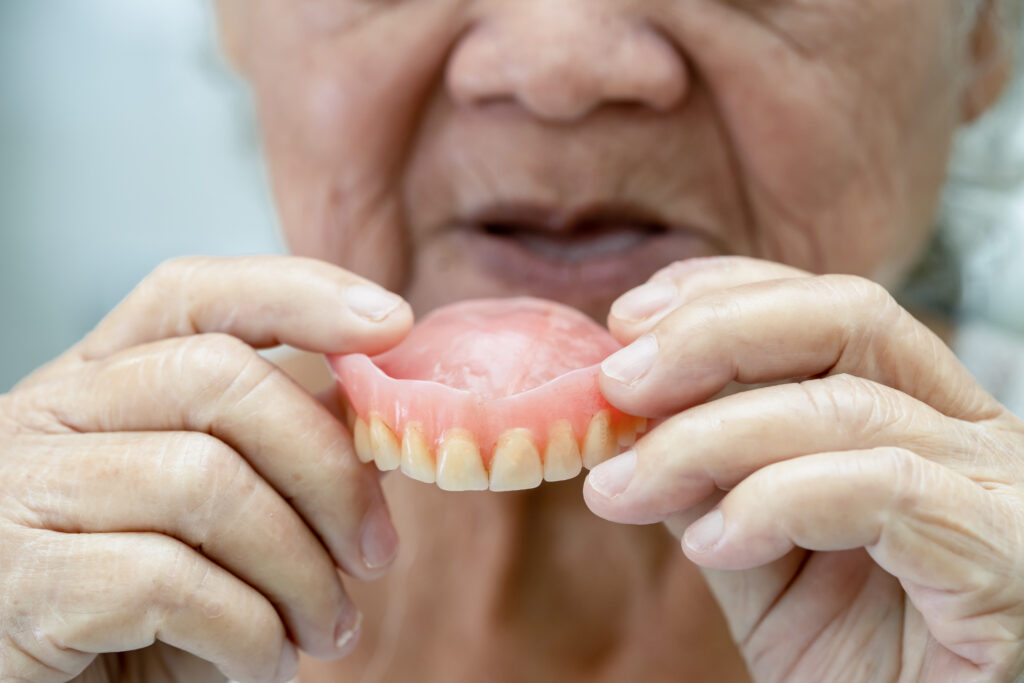
Types of Dentures We Offer
Complete Dentures
Complete dentures replace all of the teeth on the upper or lower arch and rest directly on the gum tissue covering the bone. Some people call them “plates.” A complete denture is custom shaped to your mouth for the most natural, comfortable fit possible.Overdentures
An overdenture is a type of full denture that fits over a small number of remaining, specially prepared natural teeth, often canines and premolars in the lower jaw. Keeping a few natural teeth this way has real advantages: it helps preserve jawbone, shares some of the chewing pressure, improves denture stability, and can make the transition to wearing a denture easier both physically and psychologically. Preparing the teeth for an overdenture typically involves shaping them and often requires root canal treatment, followed by protective copings that fit into the denture. Overdentures can also be designed to fit over dental implants for even greater stability.
Partial Dentures
Removable partial dentures use a metal framework with clasps or precision attachments to fill in gaps where you still have some healthy natural teeth. They are easy to take out for cleaning. Fixed partial dentures, more commonly known as bridges, are cemented in place for a look and feel closer to natural teeth, though they require healthy adjacent teeth for support and cost more than removable options.
Special Partial Dentures
A Nesbit denture replaces one or more missing back teeth using clasps on the teeth beside the gap, though it can place extra pressure on those teeth since it lacks support from the other side of the mouth. A flipper denture is a temporary option that replaces one or more front teeth right after extraction, while you decide on a more permanent solution like a bridge or implant.
Implant-Supported Dentures
If a traditional denture feels loose or unstable, implant-supported dentures attach to dental implants placed in the jaw for a noticeably more secure fit. Dr. Gupta will evaluate your jawbone and overall oral health to determine whether this option is right for you.
Conventional vs. Immediate Dentures
- Conventional dentures are made and placed after any remaining teeth are removed and your gums have fully healed, which can take several months. The process generally takes about six appointments over one to two months, including an initial exam, impressions, a bite record, a trial “try-in” with wax to preview the fit and look, and finally the completed denture along with care instructions. Follow-up visits over the following weeks help fine-tune the fit.
- Immediate dentures are made in advance from impressions taken before your teeth are removed, so the denture is placed the same day your teeth come out. This means you are never without teeth during healing. Because your gums and bone continue to shrink as they heal, immediate dentures often need a reline or adjustment a few months later, and in some cases a new denture altogether.
What to Expect With New Dentures
New dentures can feel unfamiliar at first. You may notice they feel bulky, produce extra saliva, or affect your speech slightly. These sensations typically improve within a few days to a few weeks as your mouth adapts.
- Eating: start with soft foods cut into small pieces, chew slowly using both sides of your mouth, and gradually reintroduce other foods as you adjust
- Speaking: certain sounds, especially “S” and “Sh,” may take practice. Reading aloud can help your tongue learn the new shape of your mouth
- Wearing your dentures: we typically recommend wearing them most of the time at first, including overnight, then removing them at night once you have adjusted so your gums can rest
- Sore spots: minor irritation is common in the beginning. Your follow-up visit, usually scheduled within a week of getting your new dentures, lets Dr. Gupta make any needed adjustments
If soreness becomes significant or does not improve, do not wait for your scheduled visit. Contact us right away.
Caring for Your Dentures
Good daily habits help your dentures last and keep your mouth healthy:
- Brush daily with a denture brush or a soft-bristled toothbrush and a gentle denture cleanser, never a hard-bristled brush
- Handle with care over a folded towel or a basin of water, since dentures can break if dropped even a short distance
- Keep them moist in water or a denture soaking solution when not in use, and never use hot water, which can cause warping
- Clean your gums, tongue, and palate each morning with a soft brush before putting your dentures back in
- Skip DIY adjustments or repairs, and never use household glue, which can damage your dentures and harm your health
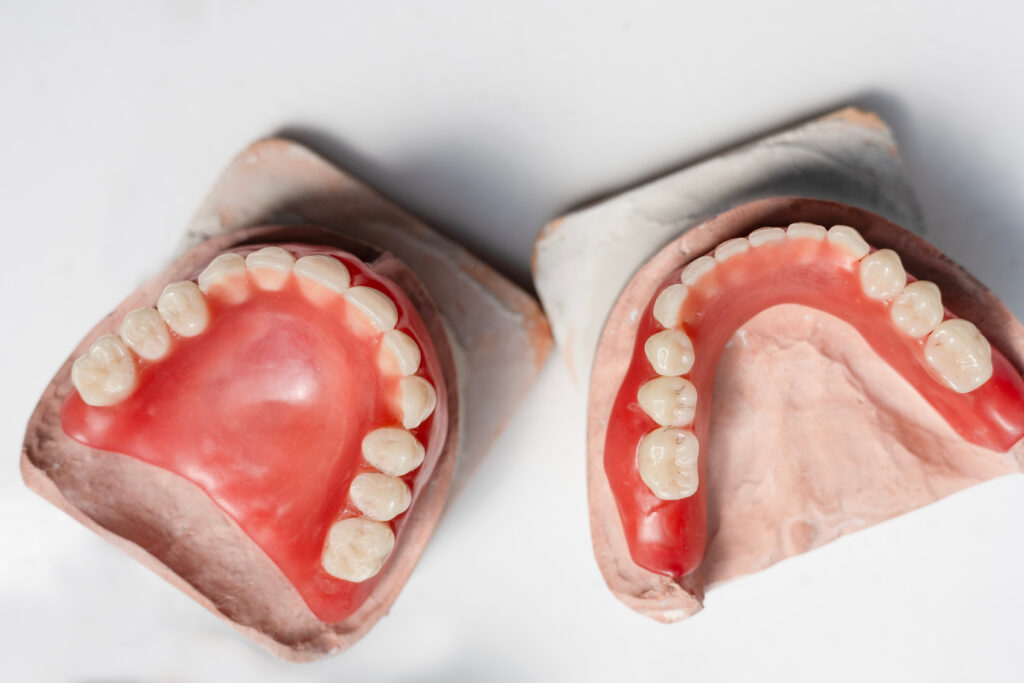
Do I Need Denture Adhesive?
Well-fitted dentures are designed to stay in place without adhesive. Adhesive can be useful in a pinch, but relying on it long-term can mask a poor fit or an underlying infection. If your dentures feel loose or uncomfortable, come see us for an adjustment rather than relying on adhesive.
When Your Dentures Need Attention
Over time, your gums and jawbone naturally change shape, so dentures may eventually need a reline, rebase, or full replacement to keep fitting well. Watch for clicking, slipping, staining, odor, or persistent soreness, all signs it may be time for an adjustment. Regular checkups let us catch these changes early and keep your denture experience comfortable.
Denture Cost and Insurance
The cost of dentures depends on the type you choose, the materials used, and whether extractions or other treatment are needed beforehand. Dental insurance may cover part of the cost, and our team can help you understand your specific benefits and coverage. If you would prefer to spread out the cost, ask us about available payment options. After your exam, you will receive a clear estimate so you know what to expect.
Why Choose SJ Dental Care for Dentures?
- Extensive experience in complete and partial denture care from Dr. Bhawna Gupta, DDS
- Full, partial, immediate, and implant-supported options to explore
- A dedicated follow-up appointment within a week of your new denture delivery
- Clear explanations at every step, with no pressure
- Convenient care for patients across San Jose, Santa Clara, and Milpitas
Denture FAQs
Conventional dentures are made and placed after your teeth are removed and your gums have healed, which can take several months. Immediate dentures are placed the same day your teeth are removed, so you are never without teeth, though they often need adjustment as your gums heal.
An overdenture fits over a small number of remaining, specially prepared natural teeth or dental implants, offering extra stability and support compared to a standard denture.
Yes. We customize the size, shape, and color of your teeth to suit your face and closely resemble your natural smile.
With practice, most people adapt well. Start with soft foods, chew on both sides of your mouth, and read aloud to help your speech adjust.
Well-made dentures usually do not require adhesive. If yours feel loose, see us for an adjustment rather than relying on adhesive long-term.
Brush them daily with a denture brush or soft toothbrush, keep them moist when not in use, and avoid hot water and household glue. Handle them over a towel or basin of water to prevent breakage.
Rediscover Your Smile
Ready to eat, speak, and smile with confidence? Contact SJ Dental Care at 408-929-9398 to schedule your denture consultation with Dr. Bhawna Gupta, DDS. Your comfort always comes first.